Scullers Eights are To Die For
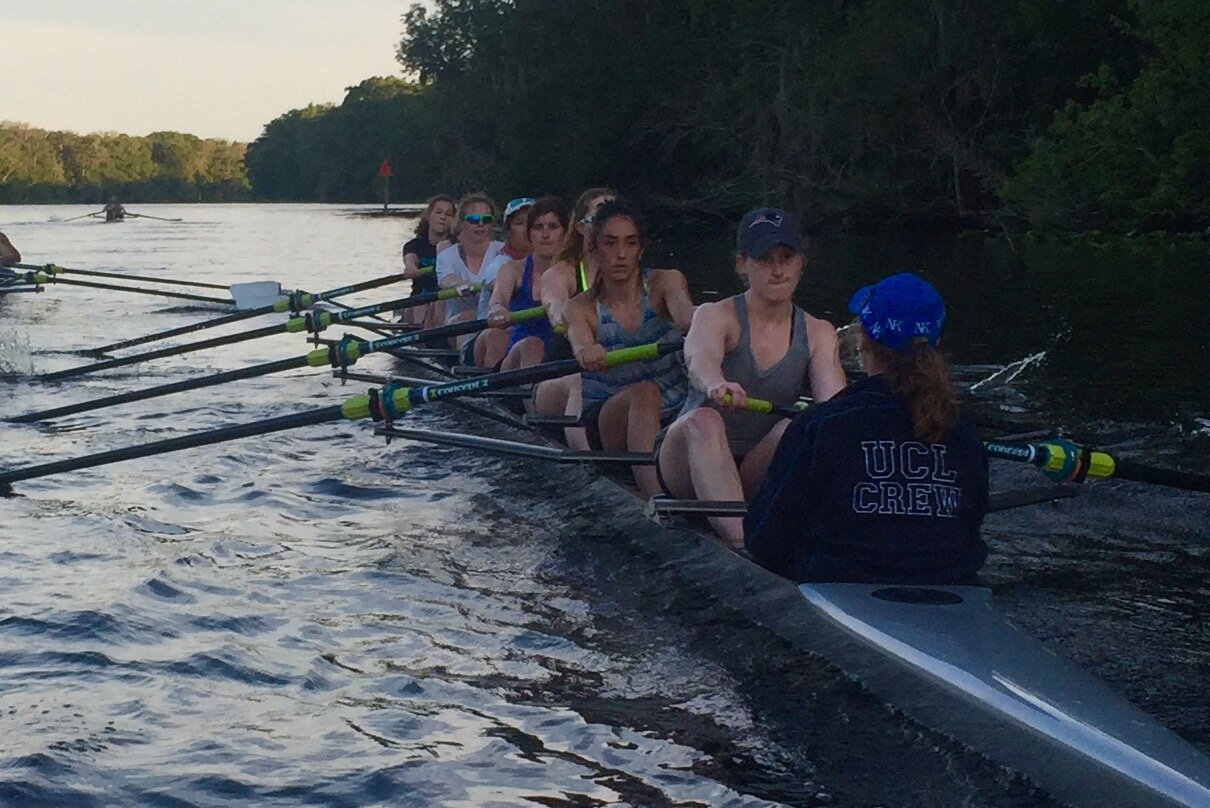
I’ve started this post more times than I care to admit, and even finished it once or twice—only to come back later and decide that, if I’m being honest, every version sounded like a string of humblebrags. And by god, I won’t have that.
That said, I’m a little salty about having something I believe pretty deeply and not yet finding the way to say it cleanly. So in the spirit of racing, let’s go out fast, nudging up against reckless.
There aren’t many coaching beliefs I’d bet my life on, but here’s one—and I mean that without hyperbole: fitness, gender, and most other variables being roughly equal, an eight made up of excellent single scullers will consistently put a beating on any eight full of big ergs who spend little or no time in singles or pairs that you can find.
This sits alongside something I started hearing within months of entering the sport but rarely saw put into practice: athletes who take their first few thousand strokes in singles adapt to fours and eights faster—and with far greater mastery—than athletes whose early experience comes in big boats or on ergs. Unless and until you feel at home in small boats, you’re clumsier than you realize in all boats.
Early in my full-time coaching years, I had the chance to test this more than once, and it quickly stopped feeling like theory. In the late 90s, there were a couple of under-used eights sitting in the boathouse where my high school scullers trained. Our program was (and remains) a sculling-only program, but the boats were there, so one spring day I decided to find out how steep the learning curve really was.
I put our most technically proficient boys and girls scullers into two eights, gave them a brief orientation on the obvious differences between sculling and sweep, and sent them out. My own memories of learning to row an eight as a collegiate novice were still vivid: instability, splashing, crabs, and the ritual shouting of “SET THE BOAT!” - as though that had ever solved anything.
After some pause drills and rowing inside hand/outside hand only by fours, I stopped and had them sit ready at half slide, blades buried, and go all eight—expecting something only marginally better than my own early disasters.
That isn’t what happened.
They just…rowed. The boat sat up and ran. No chaos. No drama. If you’d balanced a champagne flute across the gunwales, it wouldn’t have tipped or spilled. In less than a week, those crews were competitive with sweep-only programs, despite unremarkable erg scores and almost no shared time in big boats.
I’ve seen versions of that same outcome repeat themselves over the years, in different places and with different athletes. The pattern has been stubbornly consistent.
So yes—this probably still skirts the edge of stridency. I’ll live with that. It works. And if it comes to it, I’ll die on this hill.
If you want boats to go fast, get slick in the 1x. There’s no easy way to get fast—but there are smarter ways and dumber ones.
Get slick in the 1x. Just don’t let it go to your head. More on that later.